
Beyond the Warming by Bruce Shigeura
First 3 chapters of a novel.
Chapter 1
Year 211 Post-Unravelling
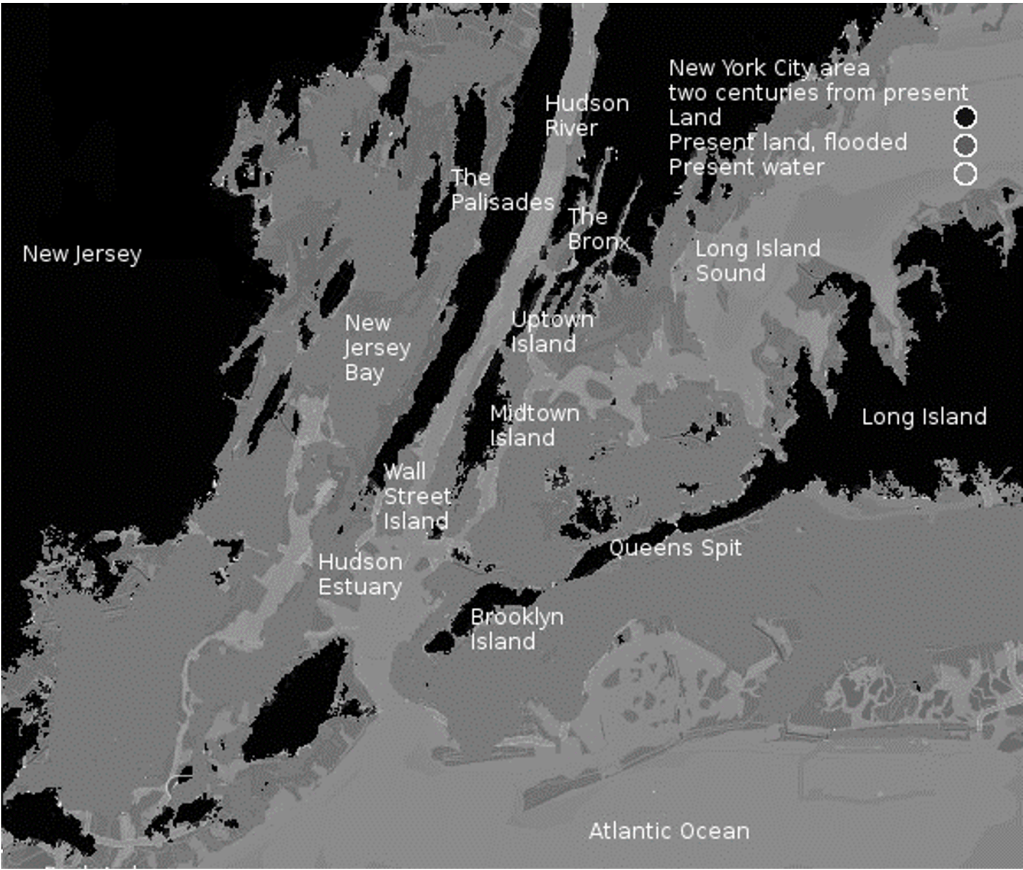
Kuautli jammed the tiller hard to his left, skirting an underwater concrete and rusted steel shoal that would have ripped his hull open. He followed Stormy’s directions, as she lay, chin on the foredeck, gazing under the surface reflection for hazards, casually tilting her bare feet to port or starboard. Xiomara sheeted out the sail, slowing them, so Kuautli could maneuver through the maze of sandy islets and jagged reefs formed on the collapsed structures of downtown Newark.
When they reached the stretch of mudflats and eelgrass, Kuautli leaned over the side and watched the bottom through his glass bottom bucket. He knew the rectangular forms of factories and warehouses laid out in a grid, their crumpled walls covered in pink and green coral. He found the reef formed on the concrete storage shed of the metal fabrication shop, steered close, and raised his hand, “Here.” Xiomara dropped the mainsheet, and Stormy lowered anchor.
Kuautli stood on the cabin roof, scanning the bay for any plume of smoke that would indicate a gunboat. Other fishermen had warned him not to venture far from Brooklyn Island with two eleven-year-old girls as crew, but he refused to yield to the arbitrary dictates of the Aeserian land-grabbers. Kuautli dove in Jersey Bay because it was the only location with the metals to smith steel alloy scythes and machetes.
Nothing disturbed the peace of the Bay. A southeasterly breeze off the Atlantic rippled the water and bent the cordgrass covering the islets. The sun rose behind the steep slope of the rust and black Palisades peninsula, casting the bay in shadow, while illuminating the dark green highlands to the west. To the south, a pod of dolphins corralled and tore into a school of cottonwick grunts, joined by diving cormorants. An osprey skimmed the surface, snatched a fish in its talons and curved toward a tall ruin, settling on a wall to eat. A manatee and her calf poked their heads up for a breath, observed the sailboat, then dropped.
Stormy tied fish heads inside the spiny lobster traps while Xiomara rigged three fishing lines. Kuautli tossed his bamboo breathing tube and its anchor into the water, checking that it floated upright, the top above water, the bottom fifteen feet down. He stripped to his loincloth, rinsed and spit on his goggles.
“Who’s taking first watch?” he asked the girls.
“I will,” Stormy said holding up the spyglass. “And Xiomara will take second. When we’re finished, you keep watch while we go in to play.”
Kuautli said, “An Aeserian patrol boat is most likely to come from the south around the Palisades, but check north as well. If you see anything suspicious, strike the gong underwater. I’ll surface, and we’ll hide our gear and catch below deck.”
The girls nodded.
“The Aeserians claim we’re poaching—stealing from them.”
Stormy’s lips puckered into a resentful pout. “Stealing from our own Bay! We’ve been fishing here since I was five years old.”
His daughter could become angry and impulsive, so Kuautli spoke in a low, soothing voice. “My great-grandparents dug for clams in the marshland when the waters first flooded this valley. My grandfather’s generation traded with southerners for live coral that we planted here. Then grouper and manatees came. To adapt and co-exist are the Way of OneSoul. We’ve always shared our traditional fishing grounds with neighboring tribes. Only Aeseria wants exclusive rights. But we have the patience and wisdom to negotiate and respect others.”
He looked at the girls for confirmation. Xiomara nodded agreement. Stormy said, “They must give us back the same respect.”
As Xiomara slipped out of her brown cotton vest and kilt and grabbed burlap bags to dive, Kuautli let out four haul ropes with hemp sacks, until they reached bottom. He hung the brass gong just below surface. He said, “One ring to haul up the sack, two for a white shark, three loud rings for an approaching boat.”
Kuautli sat on the stern rail and tipped back into the water. He swam down to the rusted furnaces, collapsed beams, and twisted cranes that had once churned out more steel in a day then he could make in a lifetime. The city of the dead was now home to a school of blue striped grunts that swam through a coral garden of yellow, fingerlike staghorns, pink seafans, flower-like green anemones, and branching hydroids. Four nurse sharks slept in a huddle in the open ruin, while the mother manatee grazed on seagrass on the factory floor, her calf paddling beside her.
He looked up to the hull of the boat. Lobster traps dropped down, then the fishlines with baited hooks. A second bamboo tube cut into the water on the far side of the boat. Xiomara dove into the water, two burlap bags trailing after her. She swam in the opposite direction, toward the collapsed ruin of a brick warehouse.
Kuautli sucked air from his breathing tube, then flutter-kicked into a concrete bunker, illuminated by light filtering through cracks in the ceiling. Piles of silt-covered rocks lay in neat rows on the floor. He collected one from each pile, dropping them near his tube. In the light, he examined each rock—black, green, red, textured or smooth, testing them with a magnetized needle, making a rough identification. He dropped those he wanted into one of the hanging sacks, took breaths of air, and returned to the bunker. When a sack was full, he tugged on the rope. Moments later, the bag was pulled upward and tied to the boat. When he had what he needed, he swam to the surface, and climbed onto the boat. As he wiped water from his body, he asked Stormy, “No Aeserians?”
“No.”
“Foragers along shore?” It was possible that the Aeserians had recruited forest people to watch the Bay and report to them. “Any people at all?”
“People of the Sea,” she said.
Manatees. Kuautli hadn’t realized how tense he’d been until she told him it was all-clear. He grinned. “Were you prepared to fight for our boat, beat off the People of the Sea if they turned out to be Aeserian collaborators?”
“Manatees are pure of heart. I’d welcome them aboard with a cuddle.” Her mouth puckered in disapproval at his joke, adding an accusatory, “They’re sweeter than some people of the land.”
Xiomara popped her head out of water and climbed on board. She hauled in her bags and dumped them into the catch box—sponges of various sizes and shapes, sea snails, and a purple octopus she held by the top of its head and worked into a bag. Kuautli picked up a snail with a pink, fluted shell and said to Xiomara, “A conch, a newcomer from the south. And very tasty. After you eat it, bring me the shell and I’ll show you how to tap a hole in it and blow a tune.”
Kuautli hauled in his sacks and dumped them on deck. He scraped off snails and barnacles, weighed each in his hand, looking closely in sunlight. He held up two rocks. “Nickel to keep my arrowheads from rusting. And tin for sealing barrels.”
“They’ll make black and red for Mami’s glassware, too,” Stormy said. “I’ll ask her to make a pendant—red heart with a black arrowhead inside. Love and battle. Or maybe the heart inside the arrowhead. Which one rules?”
“For you, the arrowhead is bigger than the heart,” Xiomara said. “But listen—I saw a ghost in the ruins.”
“A man ghost?” Stormy asked.
“Yes. I was reaching into a hole to get a spiny lobster, when I felt eyes on me. I looked up, and through a window in the ruin I saw a man standing in the shadows.”
“Did he chase after you?”
“He stood looking. He was thin and gray, with eyes that were so sad. His mouth opened and he sang to me, but I couldn’t understand. Then he disappeared. When I swam to the window, he was gone.”
Stormy turned to Kuautli, “Why was the ghost sad, Papa? Should we drive him away or help him?”
The living and the dead consorted in Kuautli’s visions, but he was skeptical of ghosts in the real world. But for Stormy and Xiomara the reefs were enchanted, so he answered, “Perhaps your gray ghost can’t give up the home and neighborhood where he lived, worked, raised a family. Though his home is still a place of joy for People of the Sea, it’s a place of sorrow for him. He weeps over the memory of what had been.”
“The Civilized should be sad,” Stormy said. “They flooded their own homes. Did they all drown?”
“Their cities shut down and they left for the forests two hundred years ago, before the valley flooded. We survived by turning to OneSoul, living in harmony with this warmer, wetter natural world.”
The girls stared at the placid Jersey Bay, as if wondering at the stories of the past concealed under its waters. They linked arms, as if to reassure each other. Unresolved questions made Stormy restless. She said, “Papa, you’re turn to babysit the boat.” She pulled off her vest and kilt, slipped on a weight belt and mask. She held hands with Xiomara, and they jumped in together.
Kuautli watched through the glass bottom bucket. As they neared bottom, they stopped flutter kicking and floated, arms and legs barely moving. The mother manatee stopped grazing and eyed them, the baby hiding under a flipper. When the mother returned to grazing, the girls swam over and were soon stroking the mother and swimming in loops with the baby. The two best friends intuitively knew how to insinuate themselves, like doting aunties. As the girls, a similar brown to the manatee, rolled and frolicked around the baby, they looked like a family in the peaceable kingdom.
Kuautli returned to sorting his rocks, with glances in all directions. As he was re-bagging his metals to take home, he saw a line of black smoke curl upwards from behind the Palisades. A boat appeared, a steam gunboat. He grabbed the gong, held it under water, and struck it with the hammer three times. He tied his sacks of metals closed and dropped them overboard. The girls surfaced and pulled themselves aboard.
“Aeserian gunboat,” he told them.
“Can we outrun it?” Xiomara asked.
“Its engine is too fast.”
The girls dressed, and they moved the gear and their catch below deck. Kuautli looked through his spyglass. A large-caliber gun on a tripod was mounted on the foredeck of the Horatio Nelson. A man in dark blue uniform sat in a black chair bolted to the top of the cabin, a gold embroidered eagle on his cap. Six men in the khaki uniforms of soldiers wielded shotguns, with the tattooed blue circles on their forehead of Lobot slaves. As the gunboat drew near, a blast from its whistle and the thudding of its pistons shattered the quiet of the Bay. The breeze brought the acrid smell of burning charcoal.
Kuautli spoke to both girls, but with eyes on Stormy, “Stay on deck, but let me talk with them.”
The leader called out, “Identify yourself.”
“I am Kuautli, the Eye of the Eagle for the Bayfolk. This is my daughter, Storm Petrel, and her friend, Xiomara. We are from Brooklyn Island.”
“What are you doing on Jersey Bay?”
“Fishing.”
“I am Colonel Morgan of the Aeserian Army. You are trespassing on Aeserian territory.”
He ordered one of the men to throw a grappling hook onto Kuautli’s deck. They pulled the boats together and secured them. The Colonel picked up a shotgun and led two soldiers onto the sailboat, while the other four trained their guns on Kuautli and the girls. The soldiers searched below deck and brought Kuautli’s diving gear and Xiomara’s catch on deck.
“Your catch and equipment are mine now,” the Colonel said. “I’ll leave you your boat . . . this time.”
“Jersey Bay is part of Bayfolk’s traditional fishing area,” Kuautli said in a low but insistent voice. “We’ve fished here since the waters rose.”
“You’ve built no ports, trawlers, mining vessels, left it a wasteland. We claim it, and we’ll make it productive.”
“How will we eat?”
“We’ll set up a market on Brooklyn Island and sell you seafood.”
Kuautli was astounded. “You stop us from fishing, then sell us fish?”
“You can’t own a bay,” Stormy shouted. Kuautli threw her a frown, but she ignored it. She pointed at the sky. “Do you own the clouds and the wind?”
“Insolent girl,” the Colonel shouted. “Next time you poach, you’ll all be arrested.”
“We belong here as much as the cormorants, the islands, the People of the Sea—the manatees,” Stormy said, sweeping her arm across the Bay.
“You do belong to the Bay,” the Colonel said in a mirthless laugh. “And now you belong to us.” The Colonel shouldered his rifle and swung it slowly around, so that it pointed directly at Stormy’s head. Kuautli stepped between them and shoved Stormy to the deck. All he saw were the black hole of the gun barrel and Colonel’s empty blue eyes.
In one quick motion, the Colonel swiveled and fired, and the manatee’s head exploded in red. The manatee sank, and its baby dove after it.
Stormy shrieked. She stripped off her vest and kilt and dove toward the pool of blood that slowly spread.
The Colonel raised one hand to his men. “We’re done here.” They returned to the gunboat and loosed the grappling hook. The engine roared to life and the gunboat turned northward.
Stormy was under for a long time, and just when Kuautli was about to dive after her, she surfaced, her arms around the calf. Kuautli lifted the calf onto deck while Stormy climbed aboard. The calf flapped and squeaked frantically.
The girls hugged and stroked its neck, making soothing sounds.
“Take it down below and put it in the lobster box,” Kuautli said. Tears were rolling down Stormy’s cheeks as she and Xiomara maneuvered the calf down the steps. Kuautli dove into the water and retrieved his four sacks of minerals. He raised anchor, set the sails, steering toward Brooklyn Island.
The Bayfolk had known of Aeseria, their closest neighbor for two centuries. It had been a recluse city, bothering no one, fishing from shore. They’d rebuffed all attempts to befriend or trade with them. Then, a few months ago, it had emerged with engine-driven boats and guns, behaving like schoolyard bullies. The Bayfolk had given them leeway, as if they were great white sharks, but the use of violence terrifying children violated all the norms of tribal relations.
When Stormy returned, she sat beside Kuautli, staring into the water. He stroked and gently untangled the knots in her wet hair. “Has the baby manatee calmed down?”
“It keeps squeaking for its mother.”
He squeezed her shoulder. “It wasn’t your fault. You couldn’t know what the Colonel would do.”
She rubbed her eyes furiously. “But we couldn’t stop him.”
“Did you say a prayer for the Mother of the Sea who gave her life?”
“I didn’t kill her,” she said angrily.
“No, but a wrong was committed, and you can acknowledge it.”
She pondered for a long time. Then she took his hand and closed her eyes. “Mother of the Sea, I am sorry you had to give your life when your baby is still so young. I thank you for the wonderful time we spent together today. I promise you I will care for your baby. The waves are beautiful forever, the tide is beautiful forever, the sea is beautiful forever. Be with the waves, the tide, the sea; be in beauty.”
The sun was setting behind the Palisades, covering them in a welcome darkness. Kuautli was thinking over how to report back to Council on his encounter with Colonel Morgan when Stormy asked, “Did that man, the Colonel, hate the Mother of the Sea?”
“No. He killed her to scare me into obeying Aeseria’s new laws.” His daughter was confident and fearless, sailing in squalls with him, diving near tiger sharks. He sensed it was Morgan’s cold indifference as he killed that disturbed her.
“Was he going to kill me before you stepped in front?” she asked.
“He threatens us to get us to comply. When you know how the wolves think, you can communicate with them and avoid trouble.” The Bayfolk could not be intimidated by shotguns and cannon, but Kuautli knew Aeseria would not be satisfied with stealing fish. They had emerged like a dragon from its cave for some broader mission. “Colonel Morgan is like a man who rages at the incoming tide. He, his soldiers, and all Aeseria’s guns and engines are still subject to the enduring cycles of droughts and monsoons.”
Her lips were pursed in concentration. “He speaks with a gun. He’s going to kill one of us Bayfolk next.”
“In our Fifth Generation when the weather was changing rapidly, a hurricane struck Brooklyn Island, sending waves surging up the slope almost to our House. It killed one out of five Bayfolk; many were babies and young children.”
She looked up, eyes wide with astonishment.
“Yet three generations later we’ve rebuilt our Houses and turned the foundations of those destroyed into ponds for shrimp and mussels.”
“I don’t think Colonel Morgan’s going to pass by like a hurricane.”
She was right. Aeseria was behaving like the Civilized. Had the Bayfolk’s two centuries of peace been just an interlude in a greater cycle? Did the Aeserians intend on disassembling the natural world, transform it into great cities that consume and expand?
Xiomara came on deck and sat beside Stormy. The girls put their arms around each other’s waists and held tightly. Xiomara said, “She’s sleeping now.”
“A baby Girl of the Sea?” Stormy asked.
“Yes. When she wakes up, she’s going to cry again for her mother.”
They were rounding Brooklyn Island, heading toward the dock. Stormy stared at the shoreline thoughtfully, then said, “We can put her in our North Shore pools with the baby turtles.”
Kuautli was relieved. Stormy’s intrusion into the dangerous world of adults had made him forget she was still a child who thrived in nature’s wonder and mystery. The girls were tough and resilient, bouncing back from fear. “Have Mami make you a bottle with a neck and a resin valve, so you can feed her goat’s milk.”
Xiomara laughed at the image. “I’m going to be a Mother of the Sea.”
“Tell the boys not to tease her,” he said. “A mother protects her baby.”
Stormy brightened. “Babytee. That’s her name. Any boys who throw rocks at Babytee, we’ll throw rocks at them. She’s very fat and blubbery and needs to eat all day. She needs both of us. We’ll both be Mommatees.”
Chapter 2
Cato entered Gnossos’ chamber, closed the heavy bronze doors behind him, and waited while his eyes adjusted to the dim red light. He located and concentrated on Gnossos’ eyes, set in black glass globes, peering through clear apertures.
“I’m confiscating the Bayfolk’s common land and water they use for fishing, foraging, and hunting. I’ll leave them only their gardens, forcing them to purchase fish and fruit from Aeseria. They’ll be begging for work in our factories and as metal scavengers. Our production of war materiel will increase exponentially.”
“Ambitious, Cato, but seizing people’s resources and forcing them to work provokes rebellion.” Gnossos’ resonant baritone from ten loudspeakers surrounding the room, echoed off the stone walls. “We must transform their society step-by-step, from self-sufficient peasant farmers and fishermen into a trained and disciplined workforce. We must teach them a belief system of submission to authority. They’ll need to release their frustrations and pain through entertainment and alcohol. We must select and buy off a local elite who understands the Bayfolk, and rule them for us. We need . . .”
Cato waved his Chief Advisor off. “I have neither the time, personnel, nor inclination to construct a colony from the ground up. I have engines, guns, cannon, Colonel Morgan, and the Lobot army.”
“We have history to learn from. When you disrupt traditions, you must replace them with something new they can stand upon and cling to. Building a peaceful and productive colony is a complex, multifaceted enterprise, and it takes time to do it properly.”
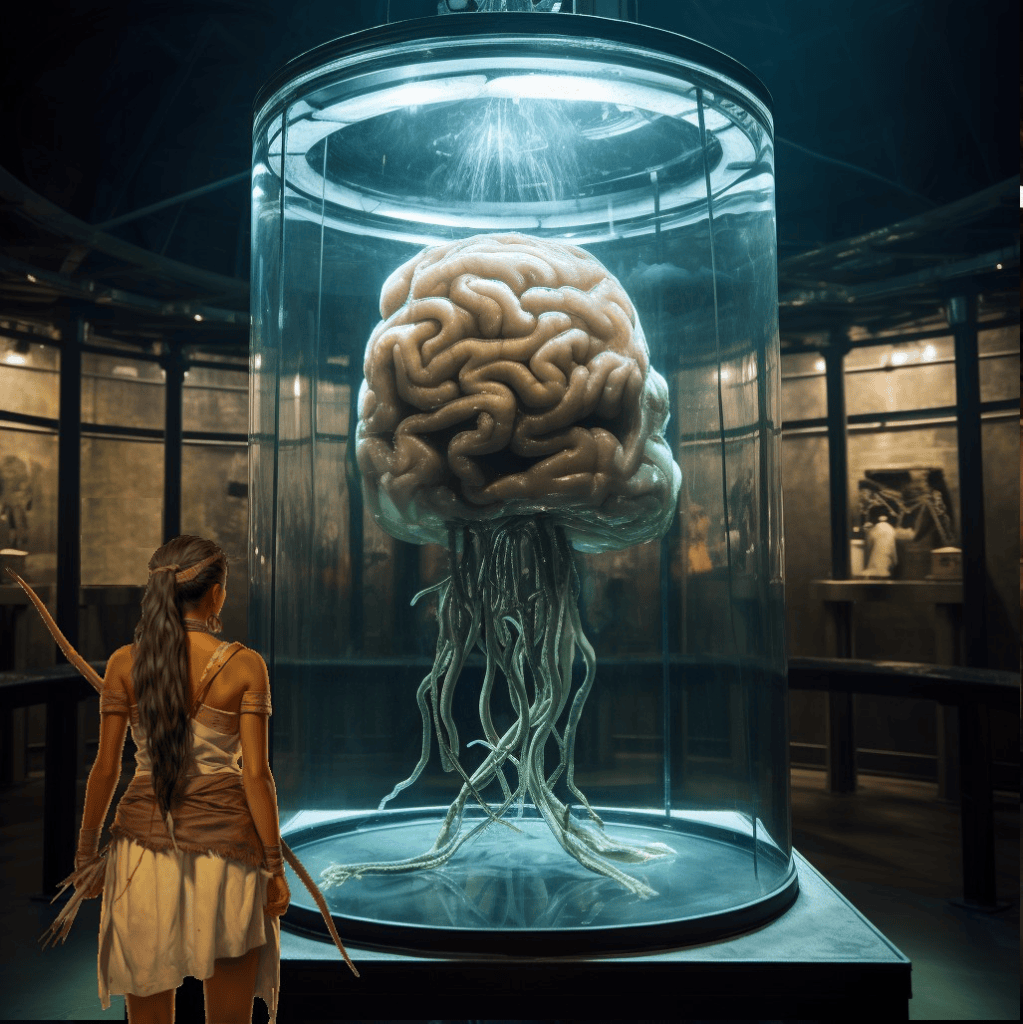
At times, Cato found his Chief Advisor’s historical lessons to be nothing more than inertia and excuses. Cato was the visionary, Gnossos, as Artificial Intelligence, supplied the detailed plans. The ten cubic meter human brain floating in cerebral fluid inside a glass tank held the most knowledge and was the fastest processor in the world. Though the Cataclysm destroyed the Internet, Gnossos contained everything from the New York Public and Columbia University Libraries. The massively parallel architecture of the human brain, with each brain cell bristling with thousands of dendritic connections, was far superior to the most advanced electronic Artificial Intelligence the old Civilization ever built.
“You’re relying solely on Aeseria’s military advantage over the Bayfolk,” Gnossos said. “Our technological and cultural superiority can shock and awe the Bayfolk, giving us time to channel them into a market economy, legal system, and an ideology of faith and submission.”
“You’re overthinking, getting bogged down. The problem with having no legs, no way to get out and see the world, is you understand the future based solely on the past. I’ve traveled the Connecticut coast, up the Hudson to West Point, across Jersey Bay to Philadelphia. I see all metals in the ruins, ready to be collected and turned into machines. I see timber for energy, whales for protein, coal in abandoned mines, limestone for construction. I see us manufacturing internal combustion engines to replace steam, upgrading our power plant, turning workshops into factories. The future is within my grasp.”
“You’re betting Aeseria’s future on a pyramid scheme, always one step ahead of failure. You have no empathy for the conquered, no moral values to provide a foundation for empire. You want to destroy and build, never re-evaluating, consolidating, pacing.”
“Great men thrust forward, and clean up afterwards,” Cato said. He walked to the wall, his heels clicking on the stone floor. Gnossos’ chamber was in the basement of Low Memorial Building on what had once been Columbia University’s campus on Midtown Island. Cato slid his hand across the original oak paneling over the niche that held Gnossos life support system—heart, lungs, nutrition, urinary, and endocrine systems.
“Look at this place—like Dracula’s Library. No wonder you’re such a drudge. You’re like a prisoner down here. Artificial Intelligence is inherently limited by rationality, plodding incrementalism. You break a problem down into little pieces, sort through your database, and select the most common solution from the past. You lack passion, drive, ambition, creativity. You have no political intuition, no killer instinct.”
“There are visionaries, yes. Then there are those who mold reality to fit their delusions,” Gnossos said. “Civilization destroyed itself by over-exploiting the natural world, driving the world’s people to the brink of despair.”
“We’ve paid for that mistake many times over. No satellites and Internet, no oil and natural gas, no global economy. It’s long past time to move forward.”
“Reason may be the slave of passion, but you must learn to appreciate fundamental principles, well-honed strategy, learning from errors and redirecting.”
“You are a useful slave. You supply the information and analysis, and I take it and transform the world.” Cato laughed. “You have data on fucking, but never fucked a woman.”
“Cato, I can access and understand the full range of multi-cultural, multi-gendered, historically diverse human sexuality.”
“But you’ve experienced none of it.” Cato walked to Gnossos’ mechanical heart, pumping in a locked steel box, and sat on it. He put his hand on the carotid artery that carried blood to the giant brain, feeling the two-stroke throb. He was putting Gnossos on edge, invading his body. “We should take some stem cells and grow you a penis.”
Gnossos sighed. “You think I have penis envy, Cato? Perhaps you’re projecting your own testosterone-fueled desires.”
“The only woman you could get is a prostitute. What’s your masculine sex appeal, Gnossos? 200 years old, a dull pinkish gray countenance, a wrinkled blob. Hard to imagine a woman even giving you a hand job. You’re the kind of man who at the end of the first date, the girl says, ‘I really like you, but as a friend.’”
“It’s true I lack sensorial sexual experience and the intense emotions that accompany it.” Gnossos paused. “An intellectual grasp of sexuality is incomplete. I understand your metaphor for living life over contemplating it.”
Cato had made the brainioid take the knee, experience a moment of self-awareness, and he felt magnanimous. “Gnossos, I rely on you not only as my Chief Advisor, but as a companion. You’re not only Aeseria’s greatest achievement; we have nothing else of consequence. We devoted two centuries to the Gnossos Project. As a result, half of Aeserians are engineering drones, glorified technicians, while the rest squander their inherited genius on breeding marijuana and engaging in Kamasutra inspired sex. We’ve produced no new culture of any depth. We subsist on awkward performances of Lear, and a nine-member orchestra. As I conquer tribe after tribe, I’m relying on you to shape our new world into a complete and coherent system that will last for centuries.”
Cato had clawed his way to the top of Aeseria’s hierarchy. As a child, he’d been small, mocked mercilessly. He was brilliant, and had used words as weapons in continuous asymmetric warfare with his bullies. While they tormented him, he observed them, identifying their flaws, their crowd behavior, and emotional weaknesses. When they became distracted by puberty and academic pressure, he’d wormed his way into their confidence, starting at the bottom, working his way through each clique to the top. Few of them were interested in Aeserian politics and government. He was elected school president, First Brother of the fraternity, Most Likely to Succeed. He doled out favors, assigned tasks, made himself indispensable to each group. He accumulated the influence and power to make or destroy careers. His peers cursed him behind his back, but they admired and feared him, grudgingly yielding to all his decisions. Cato’s dreams could not be contained within this tiny city-state.
“If you were looking down at earth from space after the Cataclysm, you would have seen all human progress stalled for two centuries,” Cato said. “A Dark Ages—hunter gatherers, peasant farmers. But hidden away in this basement, Aeserian neuro-engineers were designing and building the greatest Artificial Intelligence the world has ever seen. I’m going to use you, Gnossos, to build Aeseria into Civilization II. I’m going to obtain coal to drive generators, build an industrial base. I’ll develop neurological computers for a radio communications system, radar, smart bombs. Aeseria will absorb farmland and mineral resources, laborers and soldiers. Within a decade, we will be the central power in the Northeast. Within thirty years, we will reach and surpass Civilization I, with Aeseria the hegemonic power.”
Gnossos chuckled annoyingly. “We’re in the wood-burning steam engine stage of technological development, and you want to leap to the information age and become a superpower—two centuries of history compressed into 30 years.”
“With your knowledge of the past, we can do it.”
“Civilization must benefit humanity—medicines for the tropical diseases that plague us, universal education, global communication.”
“At some point, yes. But now I must reinvest all profits into expanding Aeserian territory to access resources and develop military technology,” Cato said.
Gnossos was silent, thinking for much longer than Cato had ever seen before, grappling with the unprecedented problem, for which historical data was inadequate.
Finally, he said, “I’ll develop a plan for Civilization II.”
Chapter 3
211 years previous
“Let’s rest,” Querina said. She dropped her duffle bag on the 17th floor landing, slid her backpack off, and collapsed against the wall. D’Artan’s knees buckled, and he lay back on his pack.
As Delaney shook her pack off, she said, “When the corporate lawyers return to their office in a month or so, they’re going to wonder what human squirrel carried all these household goods thirty-eight flights of stairs; and why in the world.”
“Either that or they’ll be holed up in their million-dollar homes, fighting off desperate hordes of looters,” Querina said.
“How did I join an End Times cult?” Delaney asked, her eyebrow cocked skeptically.
Querina took some gulps from her orange sports drink and passed it to D’Artan. While they’d been talking about this for weeks, she had to be patient with Delaney’s doubts. Either Querina was a paranoid survivalist prepper, or all the normies who continued working, cooking dinner, tucking the kids in at night, watching the news in confusion and despair were blind fools.
“Everyone sees things are falling apart,” Querina said. “We’re different only in one way—we’re not paralyzed by fear or hope, ties to family, friends, work, and community. I invited a bunch of people to join us, but they’re understandably anchored to their lives, to normal American day-to-day reality.”
“Hey, everyone said Noah was crazy,” Delaney said. “Motherfucker buildin’ a houseboat in the middle of the desert. But what happened when the rains came? He pulled up the gangplank, shot the finger at the all the assholes, and popped the cork on a Dom Perignon.”
D’Artan said, “We should build a plane and fly to an island, like Wonder Woman’s Paradise Island.”
“Rich people are doing the plane thing,” Delaney said. “New Zealand. Iceland. That’s the new Jerusalem for the secular Apocalypticists.”
“Well, we’re the low-income squatters’ version,” Querina said. “But the top of this building is very cool. You can see the Verrazano Bridge, the Statue of Liberty. Most important, no one can see us.”
“If we do this thing, I’ll take a two-week vacation,” Delaney said. “If I’m hiding out longer than that, I’m fired.”
Querina was taking a risk herself—the possibility of looking like a fool to her 12-year-old son, who idolized her. “We won’t do it unless the power goes down. If it comes back up in a day or two, no harm, no foul. If it’s down for good, your job will be the least of your worries.”
“You know, back in the day, people thought the Black Plague was God’s punishment for their sins, so they went town to town, whipping their backs raw to atone. Sounds dumb as shit, but no one knows how they’ll really react when the shit hits the fan.”
“The Northeast power grid needs fossil fuels like junkies need their dope,” Querina said. “With America’s oil reserves gone and imports from the Persian Gulf dried up, the lights are blinking out Upstate, rural New England.”
“I heard about that, but it was background noise,” Delaney admitted. “I don’t know anyone lives there.”
“There were riots last winter over price-gouging on heating oil and gas. Darkness is spreading like smoke from a wildfire, and coming our way.”
“That’s some Biblical-ass shit. My grandmother could’a told me what’s comin’ next, in King James talk.” In an old lady Appalachian accent she said, “When the red dragon and the fornicators and Gog and Magog come, clean yerself up and get down on yer knees, ‘cause the end is nigh.”
“Red dragons are good luck in China,” D’Artan said. “And what’s so scary about fornicators?”
“It’s a metaphor,” Querina said.
“I almost forgot, I found a gun for you,” Delaney said.
Querina tapped fists with Delaney. “More valuable than gold bullion.”
“38 Special, Smith & Wesson, with a box of bullets. A lady’s gun with stopping power. D’Artan could shoot it.”
“Yeah?” D’Artan perked up. “Ya got it on ya?”
“My weed guy got it on hold for me.”
Querina handed her a roll of cash for the gun. “Let’s get our stuff to the office, and we’ll eat, watch a movie, and sleep overnight.”
They struggled up the stairs to the top floor office, that had closed until further notice. They put the food and gear they’d carried in the store room with the rest of their stuff. Delaney took the macaroni and cheese and broccoli to the microwave in the break room, while D’Artan set up his laptop to watch a superhero movie he’d pirated.
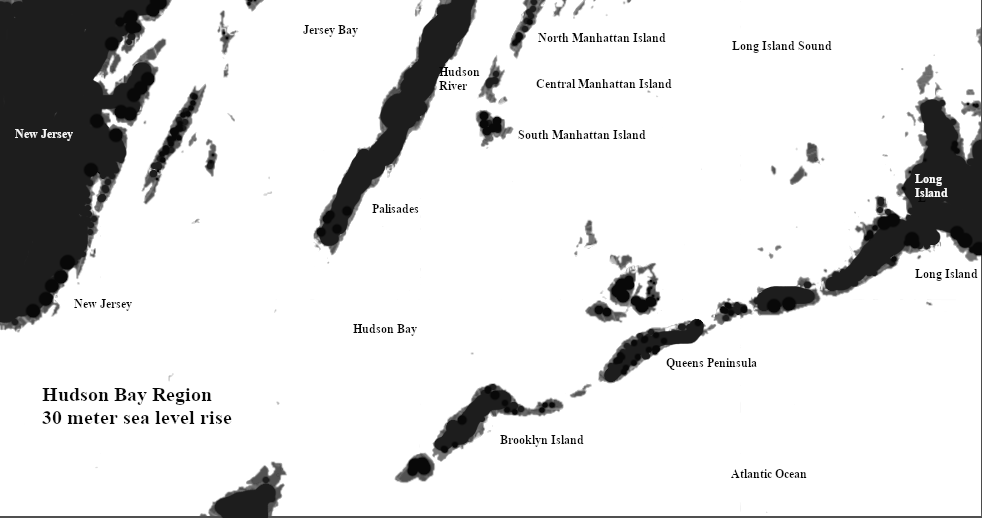
Querina walked to the window and looked down at the street. With the stock market crash and depression, the Wall Street area—ordinarily with the most crowded sidewalks in the country, was like a ghost town. The only people were walking between the Staten Island Ferry and the subway. She’d chosen the building because it was older and shabbier than the glass towers of the big investment firms, and the south windows could be seen only from Hudson Bay.
She checked her list. They’d brought up the essentials—3 months food, first aid kit, D’Artan’s eczema medication, sleeping bags, down coats, cooking and bathroom essentials, hand tools. She estimated two more trips for the long-term things—seed packs, fertilizer, and soil, bicycle frame with one wheel to power a small generator and battery.
They rolled three executive chairs into the conference room, set the laptop on the end, and ate their dinners, watching anti-heroes battle on computer graphic landscapes. D’Artan was exhausted and fell asleep on two pleather settees pushed together.
Querina and Delaney sat cross-legged on the rug in front of the window. With Downtown behind them, the Statue of Liberty, and darkened Jersey docks to their right. Brooklyn’s residential areas, Sunset Park, Fort Hamilton, and the Verrazano Bridge, were lit up.
“The quiet before the storm,” Querina said.
“Fort Hood emptied out today,” Delaney said. “Most of the soldiers said, ‘fuck the officers, fuck the army, fuck America,’ and went home to be with their families. People running backward so fast, makes your taking a step forward look like a genius, Querina.”
Querina sang, “I just knew too much; Does that make me cra-zy?”
“Why did you ask me to join you?”
“Out of all my relatives and friends, you’re the only one enlisted.”
“All this time I’m thinking, ‘I’m independent, critical thinker, Querina needs me,’” Delaney laughed. “Now, you tellin’ me I’m the only one drank the Kool-Aid.”
“One other person agreed, but hasn’t made a single hike up the stairs, so hell with him.” Querina was comfortable with living with Delaney for however long. She was reliable, good company, no hot buttons or crippling trauma. “You’re a risk taker.”
“Either that, or it’s my ADHD.”
Querina said softly, seriously, “I trust you in a crisis.” They’d roomed together when both were in their first year in New York. Delaney was from coaltown, Kentucky, blond hair, a wiry, athletic body. Querina was from West Philly’s most drug-riddled blocks, scholarship to Temple, and never looked back. Delaney was singing in an indie-blues all-women band and Querina acting Off Off Broadway, and it had been tough for both of them. One night, Querina got drunk and sat on the roof ledge. Delaney sat next to her and just talked, Querina couldn’t even remember about what, but she made it through the night. Then, when she had D’Artan, her father stopped talking to her, her mother prayed, but Delaney did midnight feedings and diaper runs to CVS and was just there, always.
“The day is coming when making the billion-dollar investment deal will be nothing, and hacksawing and hammering together a life raft is everything. You’re handy, tough, resilient.” Querina was thinking out loud.
“You brought marijuana seeds, right?” Delaney asked.
“Couldn’t find any. I got a distiller kit to purify water.”
“I can get some seeds,” Delaney said. “Potatoes to make some vodka. I can sing. D’Artan can beat box. We can circle dance. We all good. Adult penis need not apply.”
Querina was concerned Delaney hadn’t mentally cut her ties to the past, so she advised her, “Bring any personal items like photos, family heirlooms.”
“I like my memories unchained from the past, so I can pick out the useful ones.”

